
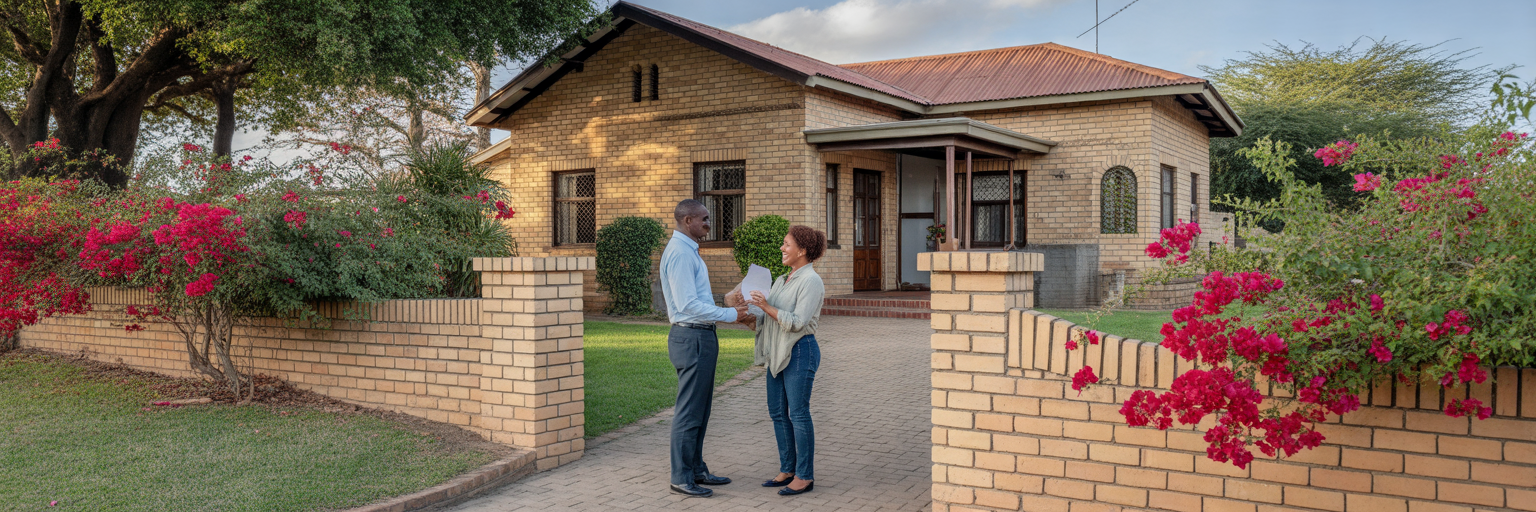
Residential real estate in Zimbabwe's second-largest city continues to attract both local families and diaspora investors, with mid-market home values holding steady between US$60,000 and US$90,000. Securing the right property requires a clear understanding of suburb pricing, municipal transfer procedures, and legal ownership checks before committing any funds.
Understanding the Market When You Buy a House in Bulawayo
The grid layout of central Bulawayo and its surrounding residential avenues dates back over a century, creating distinct neighbourhood characters that still dictate property values today. When you decide to buy a house in Bulawayo, your financial planning starts with understanding how location shapes pricing. Current Bulawayo property prices follow a clear geographical pattern across three main market tiers, and browsing legitimate houses for sale in Bulawayo through our dedicated local property catalogue simplifies initial discovery across every price bracket.
Suburb Profiles and Pricing Tiers
High-density suburbs such as Cowdray Park and Pumula offer accessible entry points for first-time buyers, with homes starting around US$25,000. Families seeking larger stands often focus on the mid-market tier in suburbs like Bellevue, Montrose, and Nkulumane, where properties generally trade between US$60,000 and US$90,000. At the upper end, spacious low-density areas such as Burnside and Hillside feature expansive grounds and mature gardens, commanding prices from US$100,000 to over US$300,000. If you want to test a neighbourhood before committing to a purchase, reviewing our guide to finding rental properties for your budget can help you evaluate daily commute times and local amenities.
Budgeting for Acquisition Costs
The listed asking price is only the first component of your total expenditure. Buyers must set aside an additional 3% to 6% of the purchase price to cover statutory transfer fees. This financial buffer accounts for government stamp duty, legal conveyancing fees, and professional physical inspections.
| Market Tier | Representative Suburbs | Typical Price Range (USD) | Estimated Extra Fees (3% to 6%) |
|---|---|---|---|
| High-Density | Cowdray Park, Pumula | $25,000 to $45,000 | $750 to $2,700 |
| Mid-Market | Bellevue, Montrose, Nkulumane | $60,000 to $90,000 | $1,800 to $5,400 |
| Low-Density | Burnside, Hillside, Suburbs | $100,000 to $300,000+ | $3,000 to $18,000+ |
Aligning your total budget with both the suburb profile and these mandatory acquisition costs ensures your purchase proceeds without unexpected financial shortfalls.
Title Deeds Versus Council Cessions in Property Transactions

Once you establish a realistic budget for your target suburb, the next step is examining the legal structure of the properties on your shortlist. When buying property in Bulawayo, you will encounter two primary forms of ownership: full Title Deeds and local authority Cessions. Understanding the structural difference between them is vital for both long-term security and transaction logistics. A Title Deed represents absolute freehold ownership registered at the national Deeds Registry, whereas a Council Cession grants personal rights to occupy and develop a property under the administrative oversight of the Bulawayo City Council.
How Ownership Types Impact Financing
Your chosen ownership structure directly determines how you can fund the purchase. Properties backed by valid Title Deeds are 52% more likely to secure mortgage approval from local lending institutions compared to cession properties. Banks prefer freehold titles because the deed serves as direct collateral. If you are evaluating how ownership structures and mortgage eligibility affect long-term asset value and resale potential, explore our insights on finding profitable property investments in Bulawayo.
Navigating Council Cession Transfers
Cession properties remain very common in high-density suburbs, and their lower price points frequently attract cash buyers. Because cession rights do not pass through the national Deeds Registry, the transfer happens directly at the local municipal housing office. Both the buyer and the seller must attend an administrative interview with council officials to verify the seller's housing file, confirm that municipal charges are up to date, and formally sign over the occupation rights.
| Ownership Factor | Full Title Deed | Council Cession |
|---|---|---|
| Registration Authority | Deeds Registry (Tredgold Building) | Bulawayo City Council Housing Office |
| Mortgage Eligibility | High (52% more likely to secure approval) | Low (Generally requires cash purchase) |
| Ownership Rights | Absolute freehold ownership of land and improvements | Personal right to occupy and develop under council terms |
| Transfer Process | Handled by a registered legal conveyancer | Processed via municipal administrative appearance |
Choosing between a deed and a cession comes down to your funding method: mortgage applicants must focus on titled homes, while cash buyers can confidently consider council cessions provided the municipal paperwork is in order.
Essential Legal Due Diligence and Fraud Prevention
Knowing the difference between ownership types prepares you for the verification stage, where protecting your capital becomes the top priority. With 34% of local property fraud cases recently involving falsified or altered ownership documents, buyers cannot afford to skip formal verification protocols. Conducting a thorough title deeds check Zimbabwe requires looking beyond the paper copy presented by a seller during a house viewing.
Verifying Records at the Tredgold Building
Before signing any Agreement of Sale, you or your legal representative must conduct a physical Deeds Registry search at the Tredgold Building in central Bulawayo. Examining the official registry file confirms the true identity of the registered owner and verifies their legal capacity to sell the home. This search also reveals whether any unrecorded bank mortgages, court interdicts, or legal caveats are attached to the property that would block a clean transfer.
Safe Payment Practices and Diaspora Guidelines
Financial safety in property transactions relies on one strict rule: all deposits and purchase funds must be paid into a registered conveyancer's trust account, never directly to the seller or an unverified middleman. As highlighted in the Ministry of National Housing and Social Amenities guidelines, following regulated payment modalities and formal agreement signing procedures protects buyers from irregular sales. For diaspora buyers purchasing from abroad, appointing a trusted local representative through a notarized power of attorney is the safest way to manage in-person registry checks and contract execution.
- Verify the seller's national identity document against the exact name printed on the original holding deed or council file.
- Conduct an official physical search at the Tredgold Building Deeds Registry or relevant municipal housing office to confirm clear title.
- Review the draft Agreement of Sale with a registered legal practitioner to ensure fair terms and clear cancellation clauses.
- Sign the final contract in person or via your legally appointed representative holding a valid power of attorney.
- Transfer the agreed deposit strictly into the conveyancing law firm's trust account against an official trust receipt.
Evaluating Infrastructure, Utilities, and Structural Compliance

While legal checks protect your financial deposit, a thorough physical inspection protects you from unexpected renovation expenses after moving in. Evaluating a house in Bulawayo requires looking past fresh coats of paint to assess utility independence and municipal building compliance.
Water and Solar Self-Sufficiency
Reliable utility backups significantly influence both daily comfort and resale marketability in the city. Homes equipped with prolific, working boreholes sell 26% faster than those relying solely on municipal supply, driven by strong buyer demand for dependable household water and garden maintenance. During viewings, buyers should also inspect off-grid power installations, including roof-mounted solar panels, lithium battery backups, and solar geysers. You will often weigh the financial trade-off between buying a lower-priced fixer-upper that requires immediate capital for borehole drilling and solar fitting versus paying a higher upfront price for a home already equipped with working systems.
Verifying Approved Municipal Plans
Physical improvements on a stand must match official municipal records. Always ask the seller to provide approved municipal architectural plans during your inspection. Comparing these drawings against the physical property confirms that the main house, staff quarters or cottages, and boundary walls were built with Bulawayo City Council approval. Purchasing a property with unapproved structures exposes you to future municipal regularization penalties or demolition orders.
- Borehole pump yield and water storage: Switch on the borehole pump to test water pressure and inspect the condition of elevated JoJo tanks and booster pumps.
- Solar inverter and battery health: Check the installation date and capacity of the inverter and lithium batteries, along with the structural mounting of roof panels.
- Roof timber and ceiling integrity: Look inside roof cavities and along ceiling boards for water stains, sagging timber trusses, or signs of termite activity.
- Plumbing and solar geyser pressure: Turn on hot and cold taps in the kitchen and bathrooms to verify steady water flow and proper drainage.
- Structural walls and foundations: Walk the exterior perimeter to check for step cracks in the brickwork, damp courses, or shifting soil around the foundation.
- Approved municipal building plans: Cross-check every existing outbuilding, cottage, and garage against the stamped council blueprints.
Managing the Property Transfer Timeline and Final Handover
Once your physical inspections are complete and both parties sign the Agreement of Sale, the transaction moves into the formal conveyancing phase. In Bulawayo, the standard property transfer timeline takes between two and four months from contract signing to the final registration of title at the Deeds Office.
Overcoming Common Transfer Delays
Several administrative bottlenecks can extend this timeline if not managed proactively. The most frequent delays involve accrued unpaid municipal council rates owed by the seller, which must be cleared before the city issues a transfer certificate. Waiting for Capital Gains Tax clearance certificates from the national revenue authority following their property valuation interview can also slow progress, as can the administrative cancellation of the seller's existing bank mortgage bond.
Finalizing Clearances and Collecting Your Keys
To secure a Bulawayo City Council rates clearance certificate, the seller must pay all historical arrears plus three months of advance municipal rates. Staying in regular contact with your conveyancer helps you track each milestone and prepare your transfer fee payments promptly so the legal team can compile the final lodgement pack:
- Original existing Title Deed and newly drafted Deed of Transfer prepared by the conveyancer.
- Valid Bulawayo City Council rates clearance certificate confirming zero municipal arrears.
- Zimbabwe Revenue Authority (ZIMRA) Capital Gains Tax clearance certificate.
- Signed declarations by both buyer and seller along with proof of stamp duty payment.
Once the Registrar of Deeds signs the new title, ownership is officially yours and you can collect your keys. By combining careful suburb budgeting, strict registry verification, and thorough physical checks, you can move from browsing listings on our platform to stepping into your new Bulawayo home with complete confidence.